Deemed Exports under GST: Everything You Need to Know
Published on: Mon Jan 22 2024
Kapil Sharma

Bio (Reveal/Hide)
Deemed Exports under GST: Everything You Need to Know
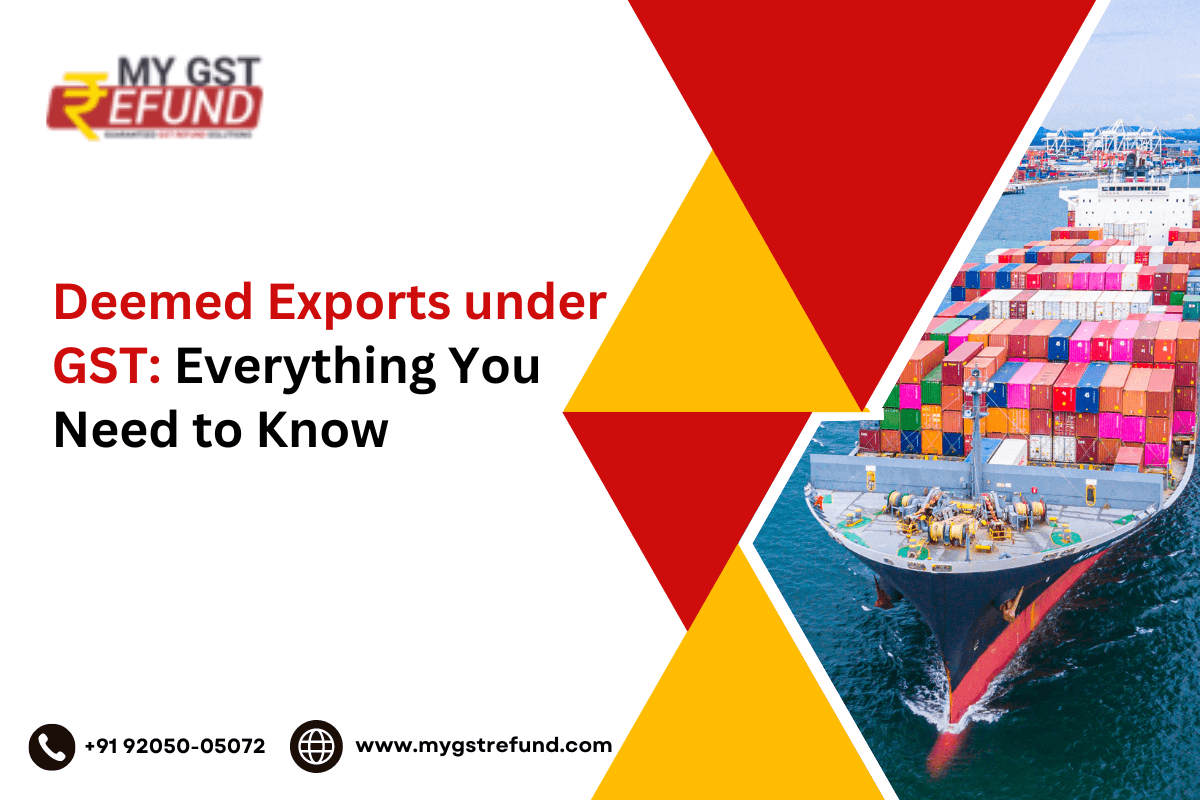
In the world of Goods and Services Tax (GST), not all exports are created equal. While traditional exports involve physically sending goods across borders, there's a special category called "Deemed Exports under GST" that offers similar benefits without ever leaving the country. Navigating this concept can be tricky, so let's dive deep into understanding Deemed Exports under GST and everything you need to know about them.
What are Deemed Exports?
Deemed Exports under GST refer to supplies of goods manufactured in India that are treated as exports for tax purposes, even though they remain within the country. This means they enjoy benefits similar to actual exports, despite not crossing any geographical boundaries. The Central Government, under Section 147 of the CGST/SGST Act, 2017, has the power to notify specific categories of goods as Deemed Exports.
Why Deemed Exports?
The government incentivizes deemed exports to promote certain sectors and boost domestic manufacturing. This includes encouraging supplies to specified categories, like:
Units in Special Economic Zones (SEZs): To incentivize manufacturing and export-oriented activities within SEZs.
Suppliers to SEZ developers: To support the infrastructure development of SEZs.
Supplies to foreign diplomatic missions: To facilitate the smooth functioning of such missions.
Supplies to United Nations (UN) organizations: To fulfill India's commitments to international bodies.
Supplies Treated as Deemed Exports Under GST
As per CGST Notification No. 48/2017-Central Tax, the Government has notified certain categories of supplies as deemed exports under GST.
The following supplies of goods are covered under deemed exports:
- Supply of goods by a registered supplier against an Advance Authorisation (AA)
(The supplier must be registered under GST, and the recipient should hold a valid Advance Authorisation.) - Supply of capital goods by a registered person against an Export Promotion Capital Goods (EPCG) Authorisation
- Supply of goods by a registered person to:
- Export Oriented Units (EOU)
- Electronic Hardware Technology Park (EHTP) units
- Software Technology Park (STP) units
- Bio-Technology Park (BTP) units
- Supply of gold by a Bank or Public Sector Undertaking against an Advance Authorisation
Taxation of Deemed Exports
Unlike regular exports, which are zero-rated (no GST levy), deemed exports are not automatically exempt from GST. They attract the prescribed GST rate at the point of supply. However, this doesn't mean the supplier bears the burden. Relief comes in the form of refund mechanisms:
Refund by Supplier: The supplier can claim refund of the GST paid on deemed export supplies by filing an application with the tax authorities.
Refund by Recipient: Under specific conditions, the recipient of the goods can also claim a refund of the input tax credit (ITC) used in the manufacture of the deemed export goods.
Benefits of Deemed Exports
Tax benefits: Unlike regular exports, Deemed Exports are not zero-rated supplies by default. However, they are subject to concessional GST rates, significantly reducing the tax burden on the supplier and recipient.
Refund of input tax credit: The recipient of Deemed Export supplies can claim a refund of input tax credit (ITC) used in making the goods, even if they were originally not eligible for ITC under the regular GST regime.
Duty drawback scheme: Certain Deemed Exports may be eligible for the Duty Drawback Scheme, where the government refunds the customs duty paid on imported inputs used in the manufacturing process.
Boost to exports: By offering tax benefits and incentives, Deemed Exports encourage domestic manufacturers to cater to specific sectors with high export potential, ultimately boosting the overall export performance of India.

Who Can Claim Refunds?
The supplier or the recipient can claim the refunds in deemed exports based on the contractual agreement.
Supplier Claim: If the supplier pays the GST in the sale, they can submit a refund application later, as per Section 54 of the CGST Act.
Claim by the Recipient: In the case where the recipient claims input tax credit (ITC) on such goods, input tax credit is available to him/her and can claim a refund rather than the supplier.
To eliminate duplication, the same transaction can only be refunded by one partner, supplier, or recipient.
Procedure for Claiming GST Refund on Deemed Exports
The application for the refund is to be submitted in electronic form in Form GST RFD-01 under the GST portal. Here’s a simplified process:
1. Period in which the deemed export occurred. File GSTR-1 and GSTR-3B returns.
2. Post the following documents, which include:
- Tax invoice and payment proof.
- Undertaking from the recipient or supplier (as applicable)
- Declaration that the other party has not revoked an ITC refund claim.
3. File RFD-01 via the GST portal and authenticate with DSC / EVC.
4 . Refunds will be done on confirmation by the tax authorities.
The period within which one can make a refund claim is two years from the corresponding date, which is usually the date of supplying or payment.
All about GSTR-1 and GSTR-3B Forms.
Both GSTR-1 and GSTR-3B are important in making claims to claim refunds on deemed exports:
GSTR-1: This type encompasses all supplies that are outward, such as deemed exports. The supplier has to record these supplies under the “Exports” section using the appropriate invoice information.
GSTR-3B: The supplier should indicate the tax liability and payment carried out under this form.
Proper matching of GSTR-1 and GSTR-3B facilitates the smooth processing of the refund and prevents rejection of the refund because of the mismatch of the data.
If you are a deemed exporter, you may be eligible for an Export GST Refund. Connect with MYGST Refund today. “We are India’s #1 automated GST Refund platform, for expert guidance and end-to-end support”. Export compliance is made easy through our platform, and faster refunds are ensured.
Categories of Deemed Exports
The list of Deemed Exports is notified by the Central Government and can be updated periodically. Some common categories include:
Supplies to units located in Special Economic Zones (SEZs)
Supplies to Export Oriented Units (EOUs)
Supplies to units in Software Technology Parks (STPs)
Supplies of goods used in aircraft, ships, and satellites
Supplies of notified high-tech goods
Conclusion
Deemed exports under GST offer a unique opportunity for Indian businesses to leverage domestic supplies for export-like benefits. Understanding the nuances of notification categories, tax treatment, and refund procedures is key to unlocking the full potential of this scheme. With careful planning and execution, deemed exports can be a powerful tool for driving growth and competitiveness in the Indian market.
Frequently Asked Questions
1. What is 0.1% GST on Deemed Exports?
Deemed exports are goods treated as exports under GST, even if they don’t physically leave India. The GST rate for deemed exports is generally 0.1% for specified supplies, like those to SEZs or government projects.
2. What Are Deemed Exports?
Deemed exports are goods supplied within India that are treated as exports for tax purposes. These include supplies to SEZ units, government projects, or exports under specific schemes.
3. Is GST Applicable on Deemed Exports?
Yes, GST is applicable, usually at a 0.1% rate, making the transaction tax-neutral for the supplier. They can claim a refund on input tax credits (ITC).
4. What is the Time Limit for Deemed Exports?
The time limit to claim refunds for deemed exports is typically two years from the relevant date (date of supply or payment).
5. How to Claim a GST Refund for a Deemed Export?
File GST returns (GSTR-1 and GSTR-3B), submit a GST RFD-01 refund application, and provide the required documents. If everything is in order, the refund will be processed.
6. What is the Difference Between Merchant Export and Deemed Export?
Merchant Export: Goods are sold to a foreign buyer and physically leave India.
Deemed Export: Goods are supplied within India but are treated as exports for tax purposes, often involving SEZs or government projects.
Related Posts