
Dock Receipt Guide for Exporters & Logistics
Published on: Fri Jan 23 2026Satendra Mishra

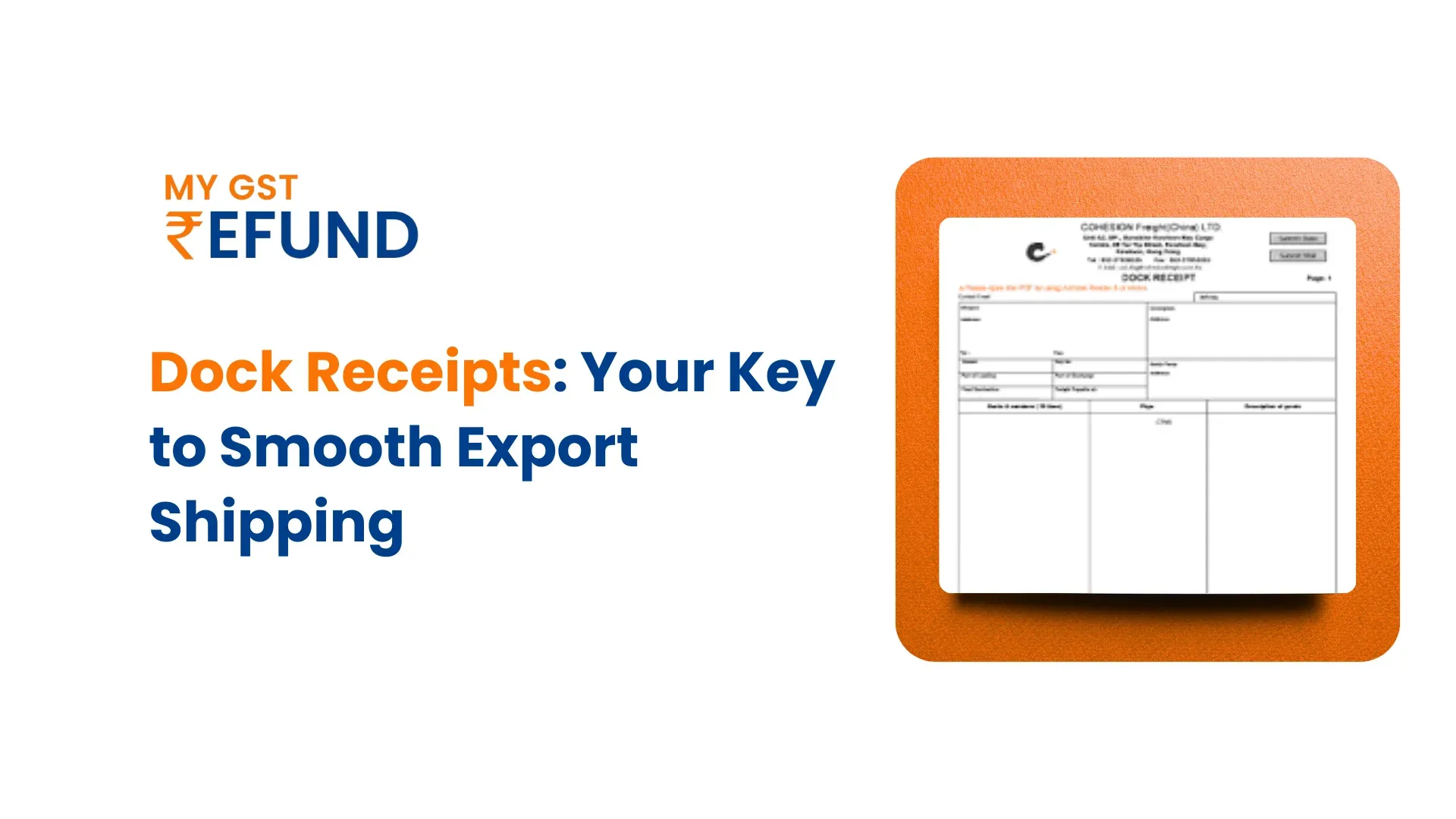
Dock Receipt Information for Exporters
In global trade, proper documentation is as important as the quality of goods that you are exporting. The dock receipt is one of the most important export documents in the shipping process and should be clearly understood by the exporters.
It links the domestic chain of logistics with the international carrier documentation process and assists in the smoothness of the customs clearance and cargo tracking.

What is a Dock Receipt?
A dock receipt is a document that is issued by a carrier, freight forwarder, or their agent to acknowledge that cargo has been received at a specific location, such as a port, a terminal, or a container freight station (CFS) to be shipped. It ensures that the goods are transferred to the carrier’s custody and creates a basis for all subsequent shipping-related paperwork.
A dock receipt is more of a document of proof of delivery to the carrier before loading, unlike a Bill of Lading (BOL), which is a legal contract of carriage, a receipt, and a document of title. It is not a transfer of ownership. It confirms that the cargo has been delivered to the terminal or the carrier’s custody for export.
Why Exporters Need to Understand Dock Receipts
The following are the reasons why exporters use dock receipts:
Evidence of delivery: This is a document that provides official confirmation that the carrier or terminal has received your goods. This assists in compliance with exports and reduces the conflict of acceptance of cargo.
Chain of custody: It is a signifier of the transfer of cargo between the shipper and carrier, which then creates accountability over the goods in transit.
Customs verification: Customs authorities are likely to check the dock receipt to verify that goods are ready to be exported and that they match the information that was declared in export filings.
Bill of Lading Preparation: The Bill of Lading (BOL) is one of the most significant shipping documents that is generated based on the dock receipt; it proves the terms of the contract and details of the cargo.
When a Dock Receipt Is Issued in the Export Process
The dock receipt is typically issued when the cargo has reached the port, the terminal, or the container facility, and the cargo is not yet loaded onto the vessel or aircraft. Based on your shipping arrangement:
- In the case of Full Container Load (FCL) export, the dock receipt is given by the inland carrier or the drayage provider at the gate of the terminal at the time of delivery.·
- In the case of Less Than Container Load (LCL) shipments, the CFS operator may issue the receipt in case of the consolidation of cargo belonging to several shippers.
The exporter keeps the dock receipt as an acceptance by the carrier, which becomes a necessity when it comes to both logistics and customs.
Read more: Types of Containers in International Trade
Key Information Included in a Dock Receipt
A dock receipt usually includes some basic points of data that the exporters need to carefully check to prevent downstream problems:
- Shipper and consignee name and address.
- Description of the cargo, packaging type, pieces, weight, and size.
- Shipment (origin) and vessel information.
- Booking number or reference number.
- Information of delivery date and place.
- Packages have marks and numbers.
- Signature or confirmation from the carrier or terminal personnel
In this case, correct information makes certain that the next Bill of Lading (BOL) will have the same information, which is essential for export financing and clearance.
How Exporters Use Dock Receipt Information
Dock receipts provide exporters with significant support throughout their shipping and logistics process:
1. Logistics and Tracking: A receipt allows you to track and is a guarantee that you will know what was delivered and accepted by the carrier. This document assists in the coordination of inland movement and port operations.
2. Bill of Lading Preparation: The information on the dock receipt usually provides the foundation for producing the official Bill of Lading (BOL) as a contract of carriage and a demonstration of goods in transit.
3. Insurance Claims: If cargo is damaged after being accepted at the docks but before leaving the port, the dock receipt offers crucial details in the claim of insurance.
4 .Customs Clearance: During the clearance of export, the customs officials can use the dock receipt to ensure that the cargo corresponds to the items that are reported in the customs forms and other export documents.
Dock Receipt Information vs. Bill of Lading Details
Although both documents are significant, they have the main differences:
1. Timing: The dock receipt is issued before the loading, and the Bill of Lading is issued after the cargo is loaded onto the ship.
2. Purpose: The dock receipt is used to confirm the receipt of cargo, whereby the Bill of Lading is used as a contract of carriage, receipt of goods, and in some cases document of title.
3. Transferability: A dock receipt is not transferable and does not represent ownership, whereas a Bill of Lading may be negotiable and traded in or used as the means of financing.
The knowledge of the two documents assists exporters in preventing inconsistencies that might postpone delivery or the release of payments.
Common Information Errors Exporters Should Avoid
Mistakes in the dock receipts can lead to delays. Some common mistakes made by the exporters are:
- Incorrect description of cargo: missing weights or incorrect number of units.
- Naming mismatch between shipper and consignee: commercial invoice inconsistencies.
- Incorrect port codes or vessel information: may slow down the Bill of Lading process.
- Unfinished booking references make it difficult to track and coordinate with the carriers.
Before signing off on the dock receipt, always verify the details with the commercial invoices, booking confirmations, packing lists, and your export schedule.
Digital Dock Receipts and Information Accuracy
In global trade, the use of digital documentation is increasing, whereby exporters and carriers can send and receive dock receipts electronically. Digital dock receipts help:
- Reduce manual errors
- Speed up order processing.
- Enhance the visibility and tracking.
- Facilitate ease of storage and retrieval of compliance.
Nonetheless, both the electronic and the paper-based systems probably focus on the same thing, which is the accurate and consistent information in the whole export documents.
Ensure smooth export documentation and claim your Export GST refund faster - connect with the MYGST Refund team today.
Conclusion
A dock receipt might appear as an additional form of export, but its contribution to confirming cargo transfer, justification of clearance by the customs, and the establishment of the basis of the Bill of Lading is invaluable. By knowing its intent and providing the correct information, disagreements will be minimised, shipments will not be delayed, and the logistic records will become clearer, which results in an easier export process.
A proactive approach to dock receipt accuracy eventually helps in achieving success in export documentation, compliance, and trade.
Frequently Asked Questions
1. What does a dock receipt mean?
A dock receipt refers to a document issued by either a carrier or an agent of a carrier stating that a dock or terminal has received the cargo before shipping.
2. Does a dock receipt mean a bill of lading?
No. A dock receipt recognizes the receipt of cargo at the port, and a Bill of Lading (BOL) is a formal carriage contract that is issued after the cargo is loaded and may be a title document.
3. Who provides a dock receipt?
When cargo is dropped at the dock or warehouse for export, it is usually issued by the carrier, freight forwarder, or terminal operator.
4. Where do I get my dock receipt?
Your freight dispatcher or forwarding agent will start to prepare your dock receipt as soon as your cargo arrives at either the dock or container freight station (CFS) for export.
5. What function does a dock receipt serve?
The dock receipts serve as documentation that the cargo was received by the carrier in good condition and are used in properly preparing the shipping and export documents, such as Bills of Lading.
Related Posts