Cloud vs Desktop GST Software: Which is Better?
Published on: Mon Mar 23 2026
Adv. Hetal Bansal

Bio (Reveal/Hide)
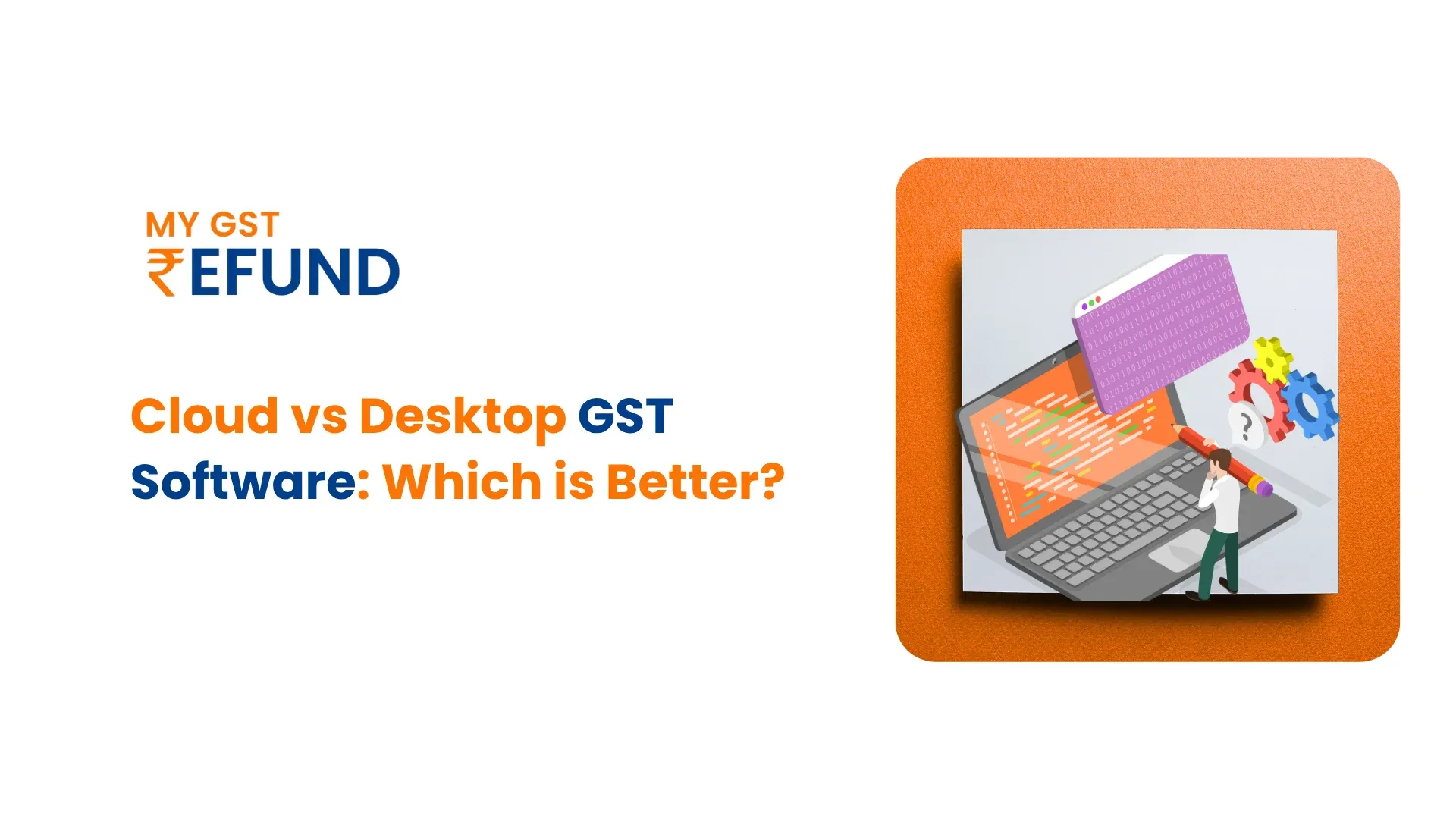
Cloud GST Software vs Desktop Software
Compliance with Goods and Services Tax (GST) has become a crucial aspect of business operations in India. From monthly return filing to invoice reconciliation and deadline tracking, businesses require accuracy, speed, and reliability.
To manage these tasks efficiently, companies use specialised tools such as cloud-based GST software and desktop-based systems. However, choosing between these two can
significantly impact operational efficiency and compliance risk.
Cloud platforms have become very popular because of their accessibility, automation capabilities, and integration ability. Desktop tools, on the other hand, continue to be attractive to organisations that enjoy offline control. The differences, merits, and weaknesses of both alternatives will enable businesses to select the most appropriate GST Return Filing Software to suit their needs.
What Is Cloud GST Software?
Cloud GST Software is a GST compliance and filing software that is used on internet-based computer systems instead of being installed locally on a computer system. These applications enable users to view their GST data, invoices, and reports on any device when they can access the internet.
The cloud solutions enjoyed by businesses include automatic updates, accessibility, and synchronisation of data in real time. This will make sure that the GST calculations, filings, and reconciliations will be in line with current government requirements without necessarily having to upgrade the manual software.
Key Features Of Cloud GST Software
Cloud-based GST platforms provide advanced features that simplify compliance and reduce manual effort:
- Automated GST return preparation and filing
- Real-time invoice reconciliation
- Multi-user access across departments
- ERP and accounting integration
- Safeguard financial historical records on the cloud
- Compliance deadlines reminders are automated
These platforms are also used as the GST Reconciliation Software to automatically match the purchase and sales data of many businesses.
Benefits Of Cloud GST Software
Cloud-based systems provide multiple advantages for modern businesses:
Anywhere Access: The user is able to log in on any device without having to install software.
Automatic Updates: The compliance changes and GST rate revisions are automatically updated.
Real-Time Data Synchronisation: Financially related information is synchronized instantly among different departments.
Less Infrastructure IT Costs: No costly servers or server management required.
Enhanced Data Protection: Cloud vendors with the best storage and backup are encrypted.
What Is Desktop GST Software?
Desktop GST software is installed locally on a computer or internal server within the organisation. All data processing, storage, and calculations take place on that
specific system.
During the initial phases of GST implementation in India, the traditional desktop tools were popular. They are still more favored by many accountants and finance professionals due to the reason that they provide full offline control, and they do not need an internet connection to carry out their daily activities.
Key Features Of Desktop GST Software
Desktop solutions generally provide the following capabilities:
- Local storage of financial data.
- GST return generation and filing preparation.
- Offline invoice management.
- Manual reconciliation features.
Controlled user access within the office network.
Benefits Of Desktop GST Software
Though cloud solutions are growing in popularity, desktop software has some benefits:
Offline Functionality: It is possible to work even without the internet.
The Local Data Control: The financial records are retained in the internal system of the organisation.
One-Time Licensing Cost: A number of desktop tools do not have subscriptions but only a one-time cost.
Custom Configuration: There are those who customise desktop software based on internal accounting procedures.
Nonetheless, desktop systems usually need additional IT services to update and back up.
Cloud GST Software vs Desktop Software
The decision between the cloud and desktop choice is based on the business size, operational structure, and compliance requirements. Cloud systems tend to be more malleable and scaleable whereas desktop tools are more offline controlling.
A comparison is provided below to enable businesses to compare both.
Feature
Cloud solutions are increasingly preferred because they minimise compliance risks and reduce manual intervention.
Best Cloud-Based Platforms For Automating GST Returns
Businesses looking for the best cloud-based platforms for automating GST returns should prioritise solutions that offer automation, compliance monitoring, and reconciliation capabilities.
ClearTax GST
ClearTax offers cloud-based GST compliance tools widely used by businesses and tax professionals.
Key features include:
- Automated GST return filing
- Input tax credit reconciliation
- Bulk invoice uploads
- Integration with accounting systems
It is commonly used as GST return filing software for medium and large businesses.
MyGSTRefund
MyGSTRefund is a GST technology software as a service (SaaS) platform located in India that offers businesses and tax professionals automated GST refund processing.
return compliance tools, notice management systems, and CFO dashboards.
Key capabilities include:
- Real-time CFO dashboard including compliance, ITC, and sales data.
- contemporary systems for reconciling GST data.
- AI-based tools, such as the document reader and GSTIN verification.
- GST notice tracking is automated and involves expert decision-making.
MyGSTRefund offers a powerful solution that streamlines the whole GST return filing process for small businesses searching for cost-effective GST filing solutions.
Zoho Books GST
Zoho Books provides integrated accounting and GST compliance capabilities in a cloud environment.
Important features include:
- GST-ready invoicing
- Automated tax calculations
- Integration with business finance tools
- Real-time financial reporting.
This makes it suitable for organisations seeking integrated finance and GST management.
How To Integrate Accounting Software with the GST Return Tool
Integration between accounting systems and GST platforms reduces manual data entry and improves compliance accuracy.
Businesses often integrate ERP systems or accounting software with GST reconciliation software for seamless data flow.
Steps To Integrate Accounting Software With GST Tools
Choose Compatible Software: Both accounting and GST software should be able to connect with other software using APIs or built-in connectors.
Enable Data Sync Settings: Make an automatic synchronization of invoices, tax information, and the ledger.
Cross Map GST Fields: This is to make sure that tax codes, invoices, and types of transactions will be the same in both systems.
Test Data Transfer: Run test records to verify that invoices and tax computations are transferred correctly.
Automate Reconciliation Process: Allow automatic reconciliation between purchase records and GST returns.
Businesses have full control of tax data and compliance processes when they are linked with GST return filing software.
Conclusion
The decisions on the use of cloud GST software or desktop systems would be determined by the operational requirements and online capabilities of a firm. Desktop tools are less dependable, as they demand manual updates and do not have as much accessibility, but they do have an offline feature, and users can control their data locally. Cloud-based platforms, in their turn, provide automated compliance monitoring, online access, and compatibility with accounting applications.
In the case of the modern business, dealing in changing regulatory conditions, cloud solutions are more efficient and scalable. Applications like MyGSTRefund are utilised in the automation of GST returns, enhancing the accuracy in the reconciliation and offering real-time compliance data. Through proper GST software, the company can remove compliance loopholes, decrease the risk of penalties, and become fully compliant with all regulations.
Frequently Asked Questions FAQs
1. Which is the best GST return filing software in India?
Choosing the most appropriate GST return filing software will also be based on business size and needs. Cloud platforms are preferred by many organisations since they are easy to integrate with accounting systems, offer real-time compliance monitoring features, and auto-feature.
2. Is Cloud GST Software safe for financial data?
Yes, the majority of cloud GST software platforms are encrypted servers, secure login protocols, and automatic back-ups to secure the financial data. Ensuring high security standards in safe storage and access, reputed providers operate under those standards.
3. Can GST software automatically reconcile invoices?
Yes, there are special GST reconciliation software that are capable of matching the purchase invoices with the data in the GST portal automatically. This assists in the arrangement of inconsistencies and proper input tax credit claims.
4. Should Small Businesses use Cloud-based GST Software?
Cloud platforms can be useful to small businesses as they facilitate making GST submissions, tax computations, and minimize compliance administration.
5. Does GST Return Tools Support Accounting Software?
Indeed, several contemporary platforms are capable of integration with accounting tools. Companies can integrate their financial platforms with GST tools to ensure that the process of invoice matching, computations of tax, and filing returns is automated.
Related Posts