GST Notices Explained: Types, Reasons & How to Respond
Published on: Mon Jan 23 2023Satendra Mishra

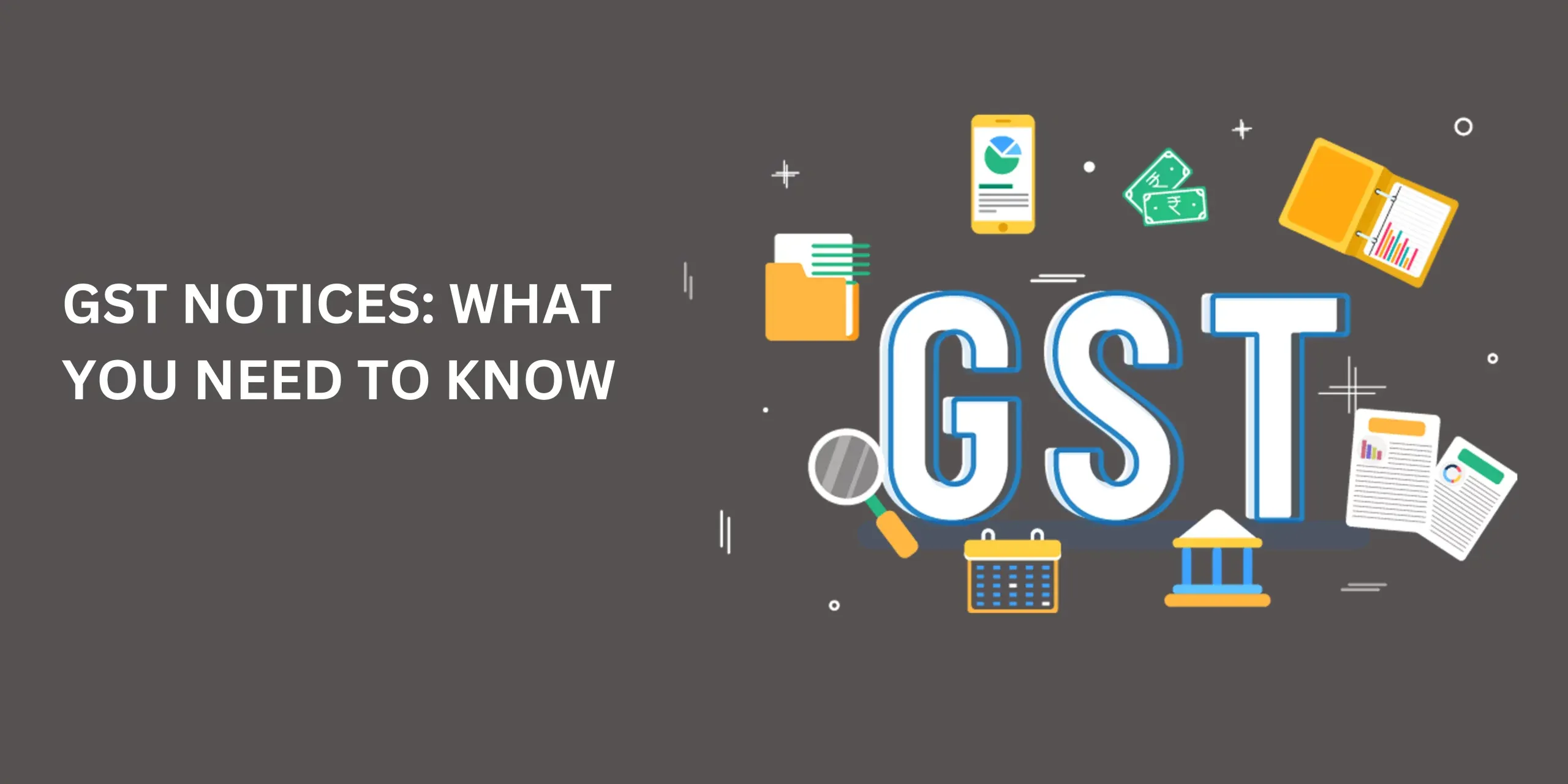
GST Notices: What You Need to Know
A GST notice in India is a formal message sent by tax authorities warning a taxpayer of a compliance problem, seeking further disclosure, or taking corrective measures under the GST regime in India. These notices are not necessarily penal in nature; most are due to various discrepancies in the data or routine checks. Still, failure to act on them may result in fines, interest, assessment, or even prosecution.
What is a Notice under GST?
A GST notice refers to an official document issued by the GST authorities and is used to notify a taxpayer about non-compliance, discrepancies, or clarifications regarding GST registration, filing of returns, payment of tax, refunds, or Input Tax Credit (ITC).
Such notices tend to be informed by the non-filing or late filing of returns, discrepancies in GST returns (e.g., GSTR-1 and GSTR-3B), incorrect ITC claims, underpayment of tax, or information obtained by other departments and third parties, such as e-way bills.
Receiving a GST notice does not necessarily imply a serious crime. It is commonly dispatched in most instances to seek clarification, demand documentation, or to ensure corrective measures are taken. The notice can take different forms based on the nature of the problem; it can be in the form of a scrutiny notice, a show cause notice (SCN), a demand notice, or an audit notice.

Knowing how to respond to a GST notice is important and should be done on time, because failure to do this may lead to penalties, interest, or cancellation of GST registration.
Why Are GST Notices Issued?
The issues of irregularities, defaults, or discrepancies identified in the filings or compliance history of a taxpayer are the reasons to issue notices by GST authorities. Some of the most frequent causes are:
Discrepancies between the GSTR-1 and GSTR-3B reported figures.
- Claims of Differences between portal data (e.g., GSTR-2B/2A) with claims in relation to Input Tax credit (ITC).
- Late or failure to file GST returns in some tax periods.
- Irregularity in information between GST returns, e-way bills, or ICEGATE data on export.
- Failure to pay or pay insufficient GST liability.
- Wrong or unnecessary ITC claims.
- Profiteering problems or failure to pass on the price benefits of GST rate changes
- Registration mistakes or late registration mistakes.
GST notices are not necessarily an indicator of wrongdoing, but they might be a request to clarify something or part of the information.
Types of GST Notices and Their Purpose
GST notices bear different purposes, and they demand different responses to be given within specific time limits. Some typical types of notice and their meaning are mentioned below:
Note: The names and codes of the exact forms (e.g., GSTR-3A, REG-17, DRC-01) are provided according to the GST regulations and are subject to change by the GST Council or CBIC.
Valid Modes of Service of GST Notices
According to Section 169 of the CGST Act, 2017, the notices on GST have to be delivered in accepted manners. Valid channels include:
- Through the email that is given during GST registration.
- Published on the GST portal dashboard upon logging in.
- Mailed by registered post or by speed post to the registered address.
- Personal or courier delivery.
- Often, in exceptional instances, a local newspaper or a notice affixed to the business address of the taxpayer will be published.
Any other method of serving a notice (not given by law) is most likely to be invalid.
How to Reply to GST Notices
It is essential to respond in the right manner and promptly, so that escalation does not occur. Key steps include:
- Get an understanding of the content and deadline of the notice.
- Collect necessary paperwork (invoices, returns, reconciliations, explanations)
- Write an articulate response along with evidence.
- Provide your answer through the GST portal.
- Apply a digital signature / e- signature of the taxpayer or authorised representative.
- In case tax/interest is payable, it is to be paid via the proper challan before replying.
You can also delegate by authorising a CA or tax practitioner to respond on your behalf by giving them a Letter of Authorisation under GST.
Consequences of Not Responding
The consequences of not responding to a GST notice within the given time may be severe and include
- Fines and charges for pending tax payments.
- Best judgment assessment based on available information
- Striking off of GST registration.
Criminal prosecution in cases of fraud, wilful misstatement or suppression of facts
A timely and correct response can be used to prevent these consequences and to show good compliance behaviour according to GST authorities.
GST notice received? Don’t panic.
MYGST Refund helps you analyse mismatches, prepare accurate replies, and resolve GST notices quickly with smart compliance checks.
Manage GST Notices with MYGST Refund GST Notice Management software.
Conclusion
One of the most important communications that the tax department undertakes in order to correct, clarify, and enforce compliance is the use of GST notices. They come into place because of various causes, such as data mismatch and late filings to refund matters or tax requests. It would be essential to good tax governance and to avoid the needless penalties to comprehend the meaning of each of the notices, reply to them within the stipulated time, and send the correct information online through the GST portal.
Frequently Asked Questions
1. What is the purpose of sending GST notices to taxpayers?
The GST notices are issued when the tax department identifies non-compliance, e.g., late/non-filing of returns, mismatch between GSTR-1 and GSTR-3B, excess ITC claim, payment of taxes, and variances discovered during scrutiny audit or assessment. Some notices are routine and meant only to seek clarification.
2. What would occur in the case of a GST notice being overlooked?
Breach of a GST notice may result in serious consequences such as demand order, recovery proceedings, penalties, interests, cancellation of GST registration, and even legal action in extreme situations. It is essential to react on time and within the stipulated deadline so that escalation does not occur.
3. What is the response of a business to a GST notice?
The reply to a GST notice should be in the form of an online response through the GST portal and with the required form as shown in the notice. The supporting documents are to be uploaded, and any tax, interest, or penalty should be paid on time.
Related Posts