Inverted Duty Structure Refund under GST:A Guide
Published on: Tue Jan 23 2024
Kapil Sharma

Bio (Reveal/Hide)
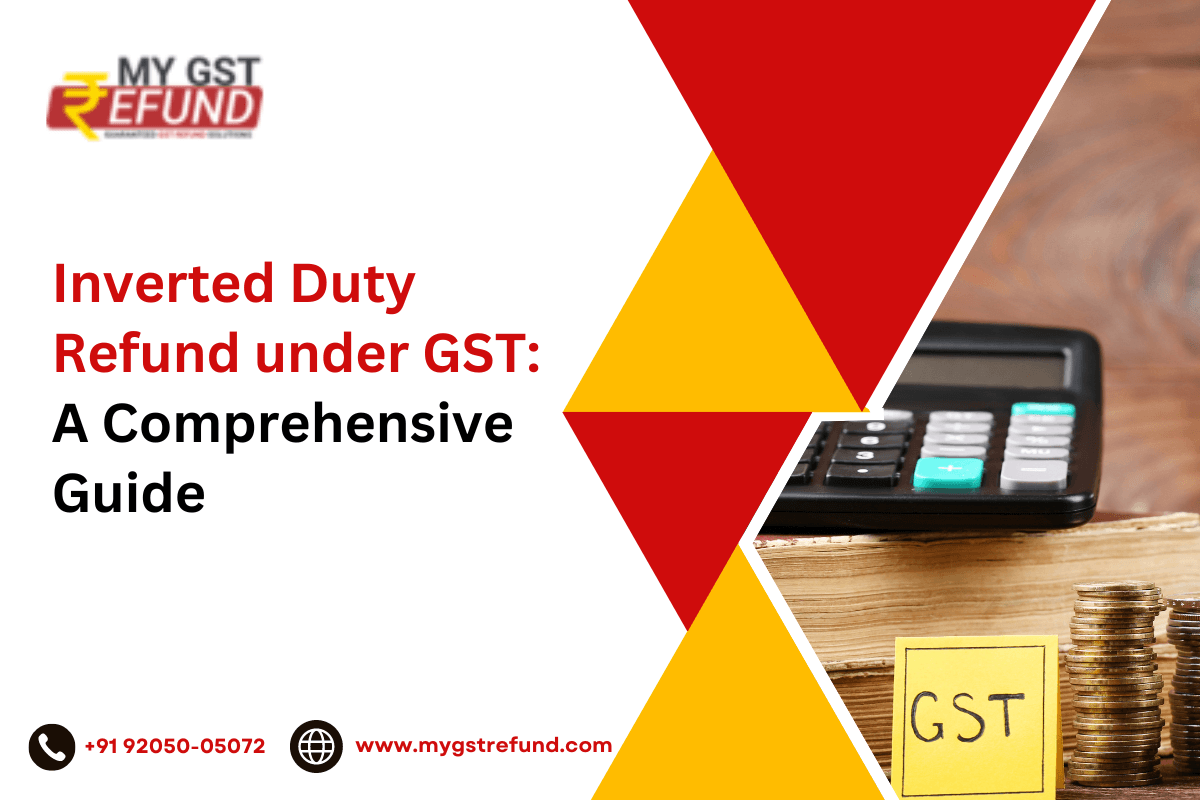
Inverted Duty Structure Refund under GST: A Comprehensive Guide
The Goods and Services Tax (GST) regime introduced in India has revolutionized the tax system. However, certain industries face the challenge of an inverted duty structure, where the tax rate on raw materials and inputs exceeds the tax rate on finished goods. To address this and encourage business competitiveness, the GST law provides for an Inverted Duty Structure Refund.
What is an Inverted Duty Structure under GST?
When the GST rate on inputs used to produce goods or services is higher than the GST rate on the final output, this is considered to be an inverted duty structure under GST. This discrepancy can result in the accumulation of excess ITC, causing higher GST burdens for you, which may increase consumer prices.
Example of Inverted Duty Structure in GST
For example, input GST ranges from 12 to 18% in the textile industry, while most final products are taxed at 5%. This implies that sellers have fewer options for offsetting the cost of input taxes.
If you are dealing with an inverted duty structure under GST, you might be eligible for a GST refund. If you are not sure where to check, try MYGST Refund's "know your GST Refund tool"
Brief Overview of the Inverted Duty Structure GST Refund
Under GST, registered taxpayers can claim various types of refunds, including input tax credit (ITC) accumulated on non-utilized inputs or on tax paid in excess due to various scenarios. The Inverted Duty Refund is a specific type of refund available to mitigate the burden of an inverted tax structure.
Latest Updates In Inverted Duty Refund And GST Refund (2025 - 2026)
GST 2.0 reforms have significantly improved inverted duty refund processing for manufacturers and exporters in India.
56th GST Council Update (Sept 2025): Recommended extending the 90% provisional refund mechanism to IDS refund claims, improving working capital for businesses.
CGST Notification 13/2025 and Instruction 6/2025: Provisional IDS refunds became effective from October 1, 2025, for eligible RFD-01 applications.
GST Rate Rationalisation: The proposed 2-rate GST structure of 5% and 18% aims to reduce future IDS cases across sectors.
Corrugated Box Industry Impact: Output GST reduced to 5% while input kraft paper remains at 18%, increasing IDS claims.
Relief for Small Exporters: Minimum refund threshold removed for courier and postal exports.
Interest on Delayed Refunds: 6% to 9% interest applies for delays beyond 60 days.
These changes are expected to reduce blocked ITC and accelerate GST refund processing across India.
Purpose of Inverted Duty Structure GST Refund:
The primary purpose of the Inverted Duty Structure GST Refund under GST is to:
Provide relief to businesses facing an inverted tax Structure under GST.
Enhance cash flow and improve business competitiveness.
Promote investment and production in specific sectors.
Industries Affected by Inverted Duty Structure After September 2025
The 56th GST Council meeting (September 3, 2025) and the resulting GST 2.0 rate rationalisation, effective September 22, 2025, resolved IDS for some sectors, but
deepened it for others by eliminating the 12% slab and moving goods to either 5% or 18%.
Sectors where IDS has worsened or newly emerged after September 2025:
Corrugated Box / Packaging Industry Output (corrugated boxes): 5% | Key inputs (kraft paper, boards): 18% Net burden: 13% per lakh of turnover. Over 20,000 MSMEs affected, employing more than 10 lakh workers.
Food Processing Output (finished goods): 5% | Inputs (packaging, advertising, services): 18% The inversion deepened after finished goods moved from 12% to 5%, while input service costs remained at 18%.
Textiles Output (garments, finished fabric): 5% | Inputs (yarn, dyes, chemicals): 12 - 18% Partially addressed by MMF fibre rate cut (18% - 5%), but service-side inversion remains.
Electric Vehicles (EVs) Output (EVs): 5% | Inputs (batteries, components): 18% Battery inputs continue to attract 18%, creating ongoing ITC accumulation for EV manufacturers.
Footwear Output (finished footwear): 5% | Inputs (leather, synthetic materials): 12 - 18% Long-standing IDS sector; improved partially, but not fully resolved.
Steel Utensils / Bells / Gongs / Sewing Machines moved to lower output slabs under GST 2.0, while inputs stayed higher, a new wave of IDS for these MSME-heavy segments.
Fertilisers and Chemicals Output rates reduced input chemicals (sulphuric acid, ammonia) attract higher rates in several cases.
Sectors where IDS was largely corrected after September 2025: MMF (manmade fibre) textiles, fibre rate reduced from 18% to 5%; footwear inputs partially aligned.
Eligibility Criteria
Entities eligible for Inverted Duty GST Refund:
Any registered taxpayer under GST can claim the refund.
However, specific exemptions exist for certain sectors like alcoholic beverages, cigarettes, and pan masala.
Conditions for Claiming Inverted Duty Structure GST Refund
The tax rate on inputs used in the manufacture of goods should be higher than the tax rate applicable to the final product.
The final product should not be nil-rated or fully exempt from GST.
The claim must be filed within the prescribed time limit.
Process for Claiming Inverted Duty GST Refund
Step-by-step guide to file an application for a refund:
Identify eligible goods and calculate the refund amount: Analyze the tax rates of inputs and outputs to determine eligibility and calculate the potential refund amount using the prescribed formula.
File Form GST RFD-01A: Access the GST portal and file Form GST RFD-01A electronically, providing details of inverted duty transactions, ITC accumulation, and refund amount claimed.
Furnish supporting documents: Upload digital copies of invoices, purchase orders, tax payment challans, and other relevant documents as proof of claims.
Submit the Application: Review the application and supporting documents for accuracy before final submission.
Also Read: Deemed Exports under GST: Everything You Need to Know
Documents Required for the Application
Invoices and purchase orders related to inverted duty transactions.
Tax payment challans for both inputs and outputs.
GSTR-1 return for the relevant tax period.
Any other documents mentioned in the GST rules or requested by the tax authorities.
Timeline for Processing Refund Claims
The tax authorities have 60 days from the date of application to process the claim and issue the refund.
In case of discrepancies or additional information is required, the processing time may be extended.
Calculation of Inverted Duty Structure GST Refund
The formula for calculating the Refund amount:
Refund amount = {(Turnover of inverted rated supply of goods) X Net ITC ÷ Adjusted Total Turnover} – tax payable on such inverted rated supply of goods
Turnover of Inverted-Rated Supply of Goods: Total sales value of goods subject to inverted duty structure.
Net ITC: Input tax credit available after excluding ineligible ITC and utilizing credit in other ways.
Adjusted Total Turnover: Total turnover of all taxable supplies excluding nil-rated and fully exempt supplies.

Claim your GST Refund Now! Use our free calculator to see how much you're owed.
Factors Affecting the Refund Amount
Tax Rate Variation: A higher difference between input and output tax rates leads to a higher refund.
Input Consumption: Higher consumption of high-taxed inputs increases the refund amount.
Output Turnover: Higher sales volume of inverted duty goods results in a greater refund.
Common Issues and Challenges
Reasons for Rejection of Refund Claims:
Incomplete or inaccurate information in the application.
Failure to provide necessary documents.
Non-compliance with GST provisions.
Discrepancies in tax records.
Delays in Processing Refund Claims:
Scrutiny by tax authorities for correctness and verification.
Pending clarification on complex issues.
Technical glitches on the GST portal.
Strategies to overcome challenges:
Maintain clear and accurate records of all transactions.
Seek professional advice for complex claims.
File applications well in advance of deadlines.
Communicate effectively with tax authorities for the timely resolution of issues.
Conclusion
The Inverted Duty Refund Scheme plays a crucial role in supporting businesses operating in an inverted tax structure. By understanding the eligibility criteria, claim process, and relevant calculations, businesses can effectively utilize this mechanism to improve their cash flow and financial health.
Also Read: TCS Refund Under GST: Impact on E-commerce and Other Businesses
Frequently Asked Questions
What is the time limit for claiming an Inverted Duty Refund under GST?
The general time limit is two years from the end of the tax period in which the excess tax was paid. However, there are extensions for specific situations:
Claims for July 2017 to June 2018: Extended until November 30, 2020.
Cases of force majeure: The CBIC may consider individual extensions.
What items are eligible for a GST Refund?
Only goods classified under an inverted duty structure are eligible for a refund. Services or NIL-rated/fully exempt goods are not included.
What is the formula for an inverted duty refund?
The maximum refundable amount is calculated using this formula:
Maximum Refund Amount = {(Turnover of inverted rated supply of goods) X Net ITC ÷ Adjusted Total Turnover} – tax payable on such inverted rated supply of goods and services
Note: This is the maximum limit. The actual refund amount may be lower depending on various factors.
Related Posts