ARQP Scheme GST: Eligibility, Benefits & QRMP Comparison
Published on: Thu Nov 12 2026
Adv. Hetal Bansal

Bio (Reveal/Hide)
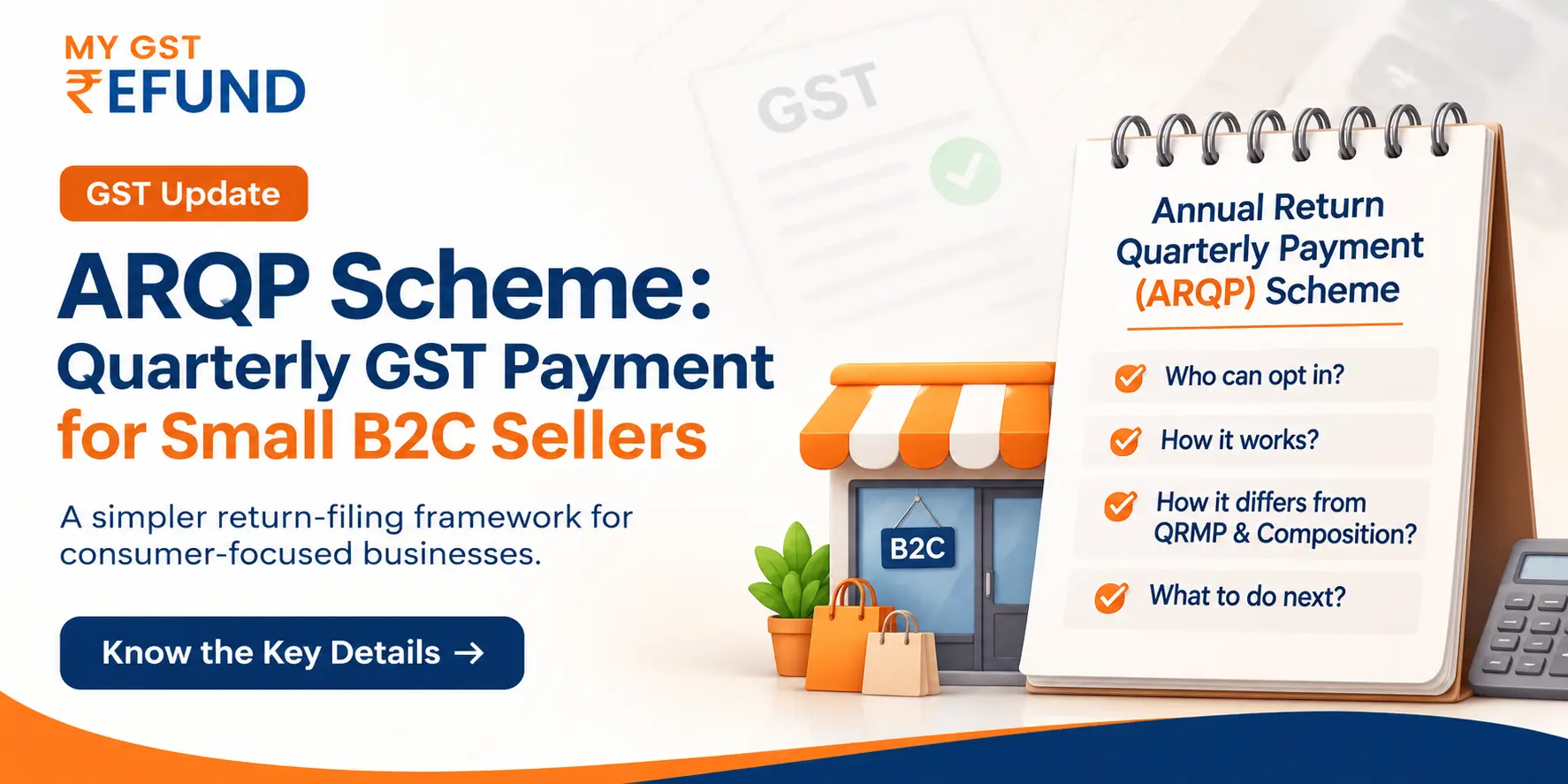
ARQP Scheme: Quarterly GST Payment for Small B2C Sellers
Why should a corner shop selling only to walk-in customers file as many returns as a manufacturer billing GST-registered buyers? The ARQP Scheme GST proposal is the GST Council's answer. Today, small B2C sellers often spend more on accountants and late fees than their returns are worth to the system.
The reason is structural. GST returns serve several purposes, including reporting outward supplies, calculating tax liabilities, and enabling eligible buyers to claim Input Tax Credit (ITC). Businesses selling exclusively to unregistered consumers generally do not generate invoice-level ITC claims for registered buyers. The proposed ARQP scheme aims to simplify their return-filing requirements while retaining quarterly tax payments. This guide breaks down what’s actually been approved, who can use it, how it stacks up against QRMP and composition schemes, and what you should do next.
What Is the ARQP Scheme GST?
The Annual Return Quarterly Payment Scheme is a new, optional plan meant for smaller, consumer-focused businesses. But first, pay attention: there’s a big difference between what’s approved and what’s still in the pipeline.
What did the 57th GST Council approve?
On 8 October 2026, the Council "approved in principle a concept note" for an optional ARQP scheme, according to the official GST Council press release.
- Approved: The concept, the ₹5 crore ceiling and the B2C-only condition.
- Pending: Forms, due dates, ITC treatment, opt-in procedure and the start date.
- Next step: The ARQP concept note requires further deliberations and the development of a detailed implementation framework. Any necessary procedural and legislative changes must be notified before taxpayers can opt into the scheme.
Why B2C Sellers Were Chosen?
If you’re a B2B seller, your GSTR-1 directly affects your buyer’s GSTR-2B. Regular, accurate reporting keeps everyone’s tax credits moving without any problems.
B2B transactions, ordinary B2C sales to unregistered consumers do not generate invoice-level ITC claims for business buyers. This distinction is one of the reasons the GST Council is considering a simplified compliance mechanism for eligible businesses dealing exclusively with B2C customers. Media reports put the number of potentially eligible taxpayers at around 16 lakh.
ARQP did not arrive alone, so it helps to see the wider package.
57th GST Council Meeting Highlights for Small Taxpayers
Several recommendations from the same meeting give GST relief to MSMEs in 2026 and reach the same sellers.
The PIB note on GST process reforms(https://www.pib.gov.in/PressNoteDetails.aspx?id=160401&NoteId=160401&ModuleId=3) lists the rest. The next step is checking whether you qualify.
GST ARQP Scheme Eligibility
Two conditions apply, and failing either one keeps you out.
Aggregate Turnover Limit for ARQP
Under Section 2(6) of the CGST Act, 2017, aggregate turnover includes taxable supplies, exempt supplies, exports and inter-State supplies made by persons having the same PAN, calculated on an all-India basis. It excludes GST and inward supplies liable to reverse charge
Problem: A retailer with three state registrations of ₹2 crore each assumes all three qualify.
Cause: Turnover is read per GSTIN in the accounting software.
Fix: Add them up. At ₹6 crore on the PAN, none of them qualify.
The "Exclusively B2C" Trap
Under Rule 46 of the CGST Rules, a tax invoice issued for a registered recipient must generally contain the recipient's GSTIN and other prescribed particulars. Therefore, businesses considering ARQP should carefully review their sales records to identify any B2B transactions before assuming they satisfy the exclusively B2C eligibility condition.
Problem: Imagine a café gets one big corporate order, and the client needs a GST invoice.
Cause: Small businesses rarely track which customers are registered.
Fix: You’ll want to scan your old GSTR-1 reports for B2B entries before you consider switching Schemes.
After you sort out eligibility, the real challenge is managing your cash flow.
How Quarterly GST Payment Would Work
ARQP changes how often you pay and how often you report. The tax amount stays the same.
Calculation Example
Take a garment shop with net cash tax of ₹50,000 a month.
For example, consider a garment retailer with a monthly GST liability of ₹50,000. Under the existing monthly payment structure, the business generally pays its tax liability every month. Under the proposed ARQP concept, eligible businesses would make quarterly tax payments instead. This could help improve short-term cash flow by reducing payment frequency. However, the exact payment schedule and working capital benefit will depend on the final rules notified by the government.
Open Questions
ITC: The GST Council's announcement does not specify how Input Tax Credit will be treated under ARQP. The eligibility, reporting, and treatment of ITC will need to be clarified in the final scheme guidelines. Taxpayers should not assume that existing ITC provisions will apply without modification until official clarification is issued.
Reverse charge: It is not yet known whether RCM, such as on commercial rent from an unregistered landlord, will also move to quarterly payment.
Annual Return: The GST Council has not yet clarified whether the proposed ARQP annual return will replace GSTR-9, operate as a separate return, or follow a modified reporting format. This detail will need to be confirmed through the final scheme guidelines.
To work through all this, a side-by-side comparison of the options helps you see the gaps clearly.
ARQP Scheme vs QRMP Scheme vs Composition
QRMP (proviso to Section 39(1) and Rule 61A) and composition (Section 10) already serve small taxpayers. The difference between regular GST and the ARQP scheme becomes clear below.
The proposed ARQP scheme could offer a simplified compliance option for small B2C businesses that do not qualify for the composition scheme or prefer to remain under the regular GST framework. Unlike the composition scheme, ARQP has been proposed with a turnover ceiling of ₹5 crore and an exclusively B2C supply condition. However, its tax rates, ITC treatment, and detailed eligibility requirements are yet to be officially notified. Businesses should wait for the final framework before deciding whether to switch.
ARQP Scheme Implementation Date and How to Opt In
No implementation date has been notified. As of 12 November 2026, no official implementation date has been announced for the ARQP scheme. The April 2027 timeline mentioned in the GST Council's wider reform package relates to a separate proposed mechanism for correcting liability and ITC mismatches in GST returns. It should not be treated as the commencement date of ARQP. Businesses should continue following their existing GST return and payment schedules until the scheme is formally implemented.
Is the ARQP Scheme Mandatory for B2C Sellers?
No. If you don’t act, you’ll just stay on QRMP or monthly filing, with the same deadlines as before.
How to Prepare Before You Opt In?
- Double-check your PAN-level turnover for FY 2025-26 and FY 2026-27.
- Check that your sales are purely B2C.
- Reconcile your GSTR-1 with your GSTR-3B before any changes arrive in April 2027.
- Keep an eye on official GST notifications for when you can opt in.
Common Mistakes to Avoid
Consider a hypothetical bakery in Nashik with an annual turnover of ₹3.2 crore. Although its turnover falls within the proposed ₹5 crore limit, a review of its GSTR-1 records reveals 40 B2B invoices issued to hotels. Since the ARQP concept is intended for businesses making supplies exclusively to unregistered persons, these transactions could affect its eligibility. The bakery should continue with its existing GST compliance arrangements until the final eligibility rules.
The sensible course was to stay on QRMP rather than split the business artificially, which invites scrutiny.
- Taxpayers must continue making GST payments within the applicable statutory deadlines. Delayed payment of tax can attract interest under Section 50 of the CGST Act, 2017, subject to the applicable provisions.
- The late fee waiver does not cover interest.
- Excess balances in the Electronic Cash Ledger can block business working capital. The GST Council has recommended automatic processing of eligible excess cash ledger refunds as part of its wider GST reforms. Taxpayers should check the applicable refund procedures and official implementation updates before claiming such balances. Businesses with eligible pending GST refunds can also seek professional assistance with the refund filing process.
Conclusion
The proposed ARQP Scheme GST could significantly reduce the return-filing burden for eligible small B2C businesses by introducing an annual return structure with quarterly tax payments. However, the final filing requirements, payment schedule, ITC treatment, and applicable tax provisions are still awaited. Until the government formally implements the scheme, businesses must continue following their existing GST compliance requirements. Until the government officially notifies the scheme, nothing changes. Use this time to check your turnover, tidy up your B2C records, and make sure your accounts match up.
If you’ve got unused tax just sitting in your cash ledger or stuck refunds from the past, services like MyGSTRefund can help you file a claim and get that money released before ARQP begins.
Frequently asked questions (FAQ's)
1. What is the Annual Return Quarterly Payment Scheme?
It is an optional scheme approved in principle at the 57th GST Council meeting. Eligible B2C sellers would pay GST quarterly and file one annual return.
2. Who is eligible for the GST ARQP scheme?
Sellers with aggregate turnover up to ₹5 crore in the preceding year who supply only to unregistered persons. Turnover is counted across all GSTINs on the PAN.
3. When will the ARQP scheme start?
There’s no official start date yet. The reforms are targeting April 1, 2027, but ARQP still needs a final sign-off and some new law changes.
4. Is ARQP a GST filing exemption for turnover under ₹5 crore?
No, this isn’t some tax holiday. The scheme only reduces how often you file. You’ll still pay tax every quarter, need to keep proper books, and file an annual return.
5. Can I claim ITC under ARQP?
The release does not address ITC. Normal credit rules are expected to continue, but confirm this once CBIC notifies the rules.
Related Posts