GST Multistate Registration: Master TRN Guide
Published on: Mon Oct 05 2026
Adv. Hetal Bansal

Bio (Reveal/Hide)
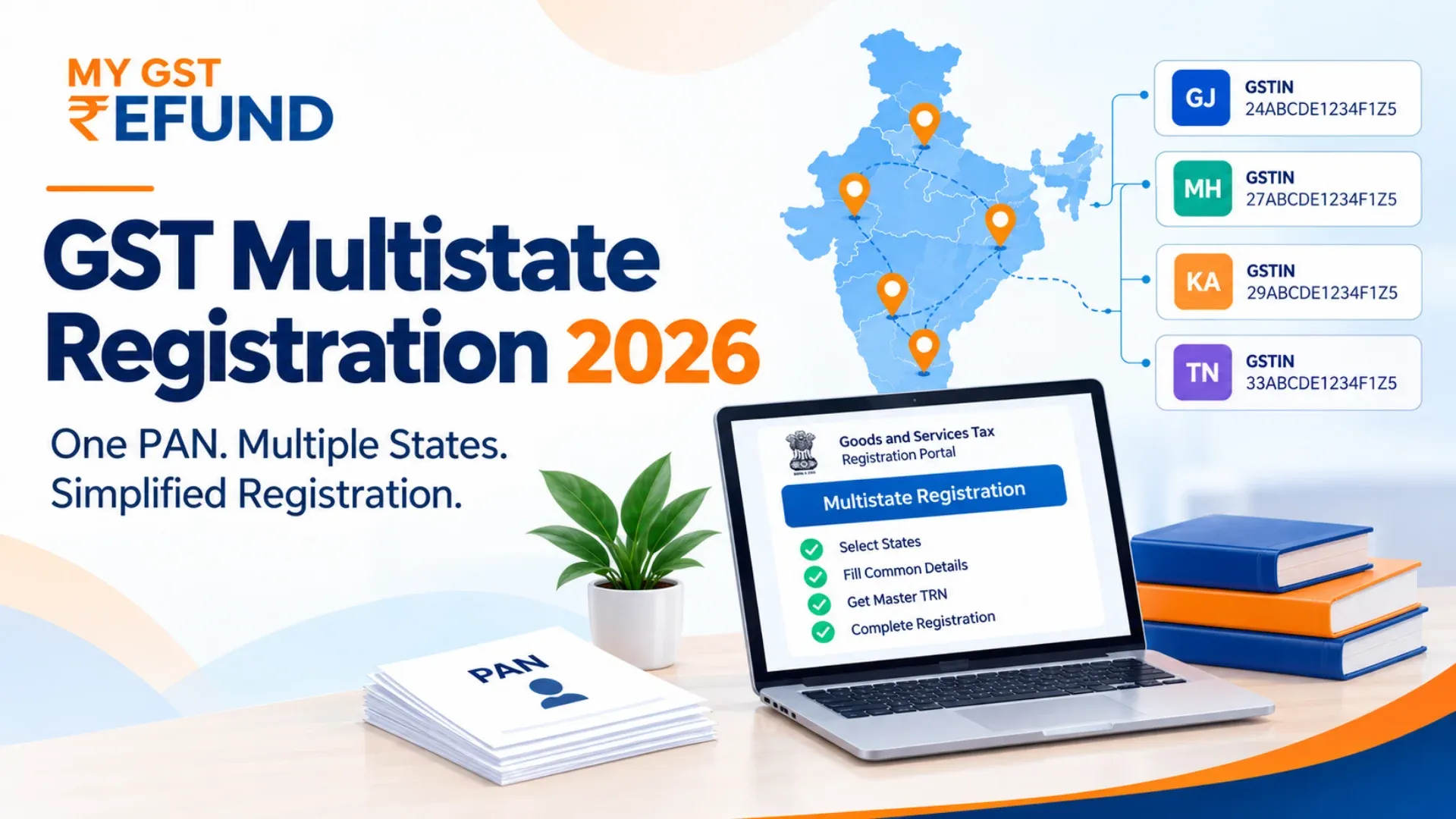
GST Multistate Registration Facility: Master TRN Guide
Why should one PAN holder type the same registration details again for every State it operates in? Until now, taxpayers generally had to initiate separate registration applications for each State/UT and repeatedly enter common registration information.
To reduce repetitive data entry, GSTN launched the Multistate Registration facility on 1 October 2026, allowing taxpayers to enter common registration information once and use it across multiple State/UT applications. This guide introduces you to the advisory, the Master TRN logic, the legal limits, and the traps you don't want to encounter.
What Is GST Multistate Registration? The Advisory at a Glance
This is a faster application route, not an all-India GSTIN. Each State/UT still produces its own GSTIN.
Some secondary reports add that one Master TRN allows only one registration per State/UT. That condition is not in the advisory text, so confirm it on the portal.
How to Apply for Multiple GST Registrations Together?
With the scope clear, here is the GST multistate registration process step by step, in portal order.
- Visit the GST Registration Portal and select the Multistate Registration option.
- Select the States/UTs for which registration is required and proceed with the Multistate Registration application.
- Select the required States/UTs. The portal generates a Master TRN for the multistate registration application.
- Fill in Common Registration Information (Business information, promoter/partner information, authorised signatory, authorised representative, and goods and services).
- Complete and submit the Common Registration Information associated with the Master TRN within 15 days of its generation.
- Get individual State TRNs. Common data is auto-populated and is left editable.
- For each State/UT, complete the Principal Place of Business (PPoB), Additional Places of Business (APoB), other State-specific information, and the applicable Aadhaar authentication requirements
- Track every application individually till the issuance of its GSTIN.
Editable data cuts both ways. An error in the common stage travels into every State, so check the legal name against PAN before submitting.
GST Master TRN vs State TRN vs GSTIN
Three numbers appear in this journey, and mixing them up causes most of the confusion.
A GSTIN is a State/UT-specific registration number and contains the applicable State/UT code and the taxpayer's PAN as part of its structure. Therefore, the same PAN can have multiple GSTINs across different States/UTs.
What You Enter Once and What You Enter Per State?
Knowing the split helps you prepare in the right order.
Eligibility: Who Should Use It and What It Does Not Change?
- Eligibility has two layers: the portal's and the law's.
- Portal layer: Normal Taxpayers, same PAN, two or more States/UTs.
- Legal layer: Under Section 25(1) of the CGST Act, a person who is liable to be registered must apply for registration in each State or Union territory in which the person is liable to be registered. The application must be made within 30 days from the date of becoming liable. Casual taxable persons and non-resident taxable persons must apply at least five days before starting business.
- Distinct persons: Under Section 25(4), each State GSTIN is a distinct person. GST registrations of the same PAN in different States are treated as distinct persons. Supplies between such distinct persons may be taxable even when made without consideration, subject to the applicable provisions of Schedule I and other GST rules.
- Thresholds: The Multistate Registration facility does not itself change the applicable GST registration thresholds or statutory conditions. Aggregate turnover continues to be considered at the PAN level, subject to the applicable provisions and exceptions.
- Typical users: Corporates establishing regional branches/offices, pan-India service providers, and businesses setting up permanent places of business across multiple States as Normal Taxpayers.
Documents Required and the Aadhaar Question
The facility trims typing, not paperwork. Keep these ready before generating the Master TRN.
The advisory keeps Aadhaar authentication at the State stage. Note that for high-risk applicants or applicants from notified jurisdictions, mandatory biometric authentication of Aadhaar is required to be carried out at any of the Suvidha Kendras as directed under Rule 8 (4A).
Worked Example: One Company, Four States
Let us assume a hypothetical private limited company which is registered in Gujarat, Maharashtra, Karnataka and Tamil Nadu.
Common Mistakes to Avoid for GST Multistate Registration
Most delays trace back to a few repeat errors.
- Generating the Master TRN before collecting documents. The 15-day clock starts immediately. Prepare first.
- Selecting States "just in case." Every State GSTIN brings its own return obligations, even for nil periods.
- Wrong name, email, or mobile in common data. The error replicates across States.
- Weak place-of-business proof. A mismatched address invites queries that stall that State.
- Assuming pooled credit. Do not assume that ITC can simply be pooled between different GSTINs. The GST framework provides specific mechanisms for dealing with input-service credit and supplies between distinct persons, including the Input Service Distributor (ISD) mechanism and applicable cross-charge provisions
- Forgetting Rule 18. Place the certificate in all offices.
In the case of Export units, registration details like name, bank account, etc. will come later; only the GSTIN, irrespective of the name, will be used for filing refund claims.
For exporters managing multiple GSTINs, a GST refund platform such as MyGSTRefund can help monitor and manage refund-related activities across registrations.
Conclusion
The multistate facility removes repeated typing, but GST remains State-wise at its core. The multistate facility reduces unnecessary typing, yet at the core of GST is the State-wise nature. Create documents ahead of time, generate common data, submit paperwork within 15 days, and follow all State TRNs.
Once the GSTINs of the multi-State setup are active, MyGSTRefund can assist with the refund process. Before filing the first claim, contact the MyGSTRefund team.
Frequently Asked Questions(FAQ's)
1. What is GST multi-state registration?
It is a portal route for starting registrations in several States/UTs together under one PAN, using a Master TRN.
2. Does one Master TRN give one GSTIN?
No. Each State/UT application ends in its own GSTIN.
3. How long is the Master TRN valid?
The advisory requires submission within 15 days. There is no separate deadline that is published for State TRNs, so complete them promptly.
4. Who can use the GST multistate registration facility?
Currently, only Normal Taxpayers can use the GST multistate registration facility.
5. Can I use the multistate registration facility if I already hold a GSTIN?
The GST multistate registration facility advisory does not say so. The September 2026 auto-population facility is built for that case.
Related Posts