E-Way Bill Portal Changes From June 15, 2026
Published on: Tue May 26 2026
Adv. Hetal Bansal

Bio (Reveal/Hide)
Key E-Way Bill EWB Portal Enhancements Businesses Must Prepare For In 2026
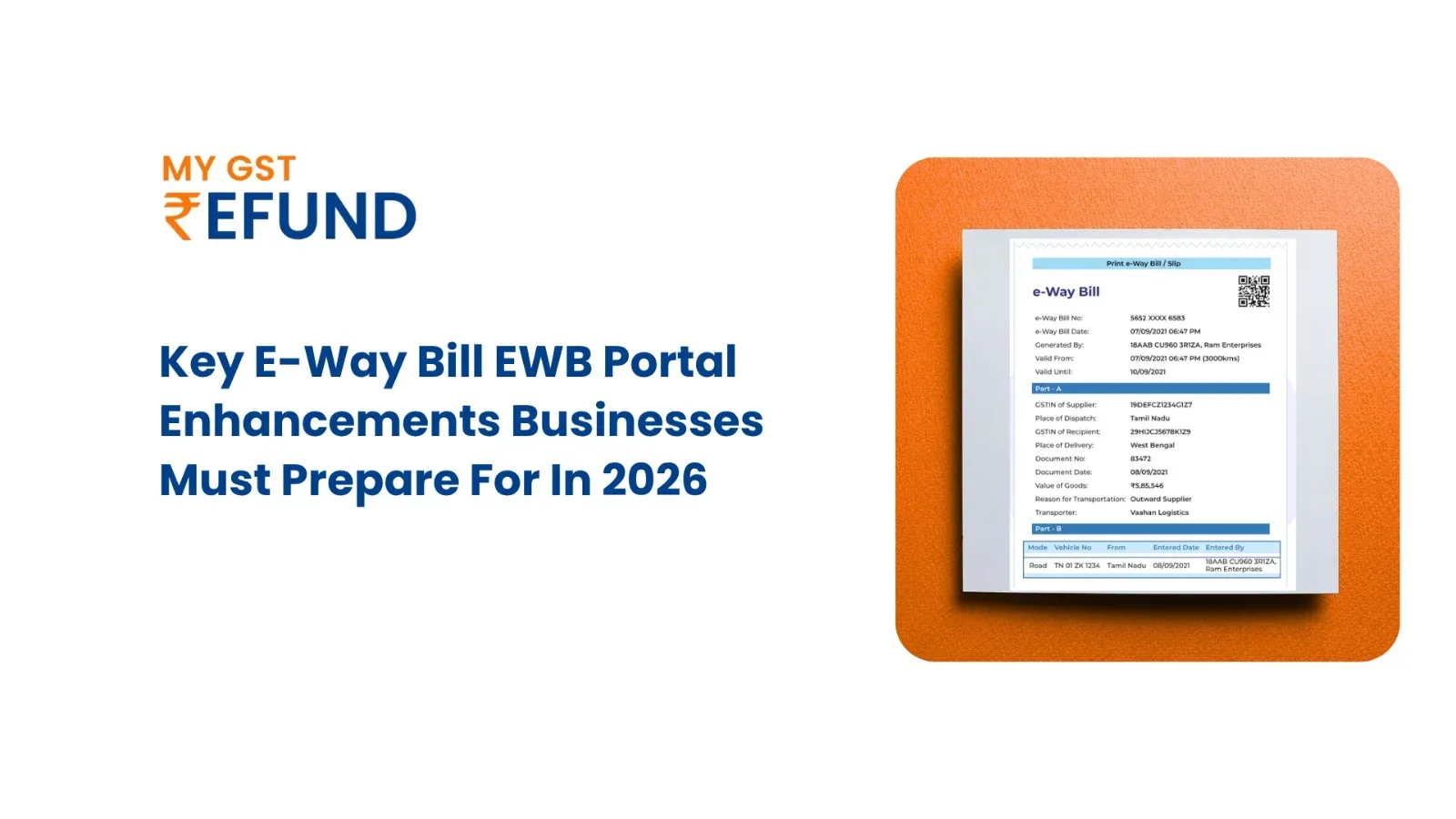
From June 15, 2026, important changes are coming to the e-Way Bill (EWB) portal. A new mandatory field will affect Bill-To/Ship-To transactions, plus businesses now get an option to formally close e-Way Bills after delivery. ERP systems, transporters, taxpayers, software providers, and everyone connected to goods movement will feel this update in some way.
Here is what has changed and what businesses should fix before the deadline arrives.
What Has Changed In The E-Way Bill EWB Portal?
The latest EWB update brings two major changes. One is mandatory. The other is optional, yet useful.
Businesses using Bill-To/Ship-To transactions must now enter a Ship-To GSTIN while generating e-Way Bills. Alongside this, the portal now allows voluntary closure of e-Way Bills after delivery.
There are also API updates for ERP vendors, GST software providers, and system integrators.
A Quick Look At The Main Updates:
Small changes on paper but bigger impact in day-to-day operations.
Businesses Must Now Add Ship-To GSTIN In Bill-To Ship-To Transactions
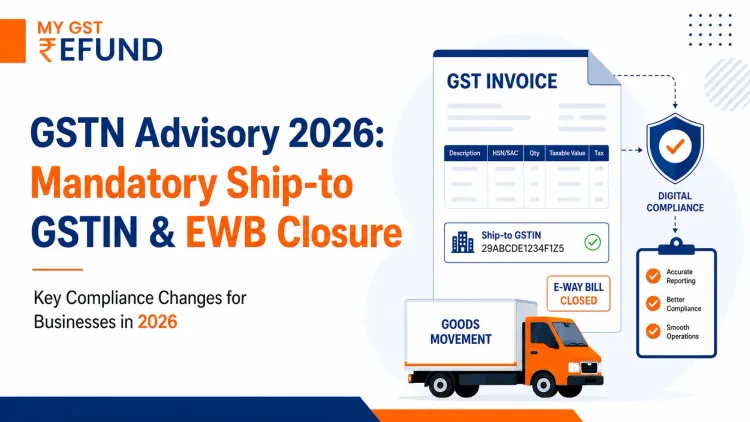
This is the update businesses should not ignore. From June 15, 2026, the “Ship To GSTIN” field becomes mandatory in Bill-To/Ship-To transactions.
Earlier, many businesses treated it as optional, but that will no longer work. If this field is missing, e-Way Bill generation may get blocked.
Who Will Be Affected By This Change
Any business where billing and delivery addresses are different should pay attention. Think warehouses, dealer networks, third-party shipping, branch transfers, distributors, customer-directed deliveries.
If goods are billed to one party but shipped somewhere else, this rule applies. And yes, many companies use this model more often than they realise.
What Businesses Need To Enter In The Ship-To GSTIN Field
The value depends on who receives the goods.
- If the consignee is GST registered, enter their GSTIN in the Ship-To GSTIN field.
- If goods are shipped to an unregistered person, enter “URP” instead.
Sounds simple. But many ERP systems still do not have this field built properly into dispatch workflows.
What Businesses Should Do Before June 15, 2026
Waiting till the last minute is risky here. Businesses should start reviewing dispatch forms, ERP masters, and e-Way Bill templates now.
Missing consignee GSTIN details later can slow shipments or stop them altogether.
A few things deserve immediate attention:
- Identify all Bill-To/Ship-To transactions used in operations.
- Update GSTIN records for all delivery locations.
- Make Ship-To GSTIN a mandatory field in ERP systems.
- Train dispatch and accounts teams on the updated process.
Small fixes now save operational stress later.
The New E-Way Bill Closure Facility Is Now Available
The second update is optional, but useful. Businesses can now formally close an e-Way Bill once delivery is completed.
Earlier, there was no proper way to officially mark a shipment as completed after the goods reached the destination.
This changes that. It improves tracking, keeps records cleaner, plus reduces old open transactions sitting in the system for no reason.
Who Can Close An E-Way Bill
The closure option is available to different authorised parties involved in delivery.
This includes:
- Supplier
- Recipient
- Transporter
- Driver or authorised person with a registered mobile number
That flexibility matters, especially when deliveries involve logistics partners or field staff.
How Logged-In Users Can Close An E-Way Bill
For suppliers, recipients, and transporters, closure happens through the EWB portal after login.
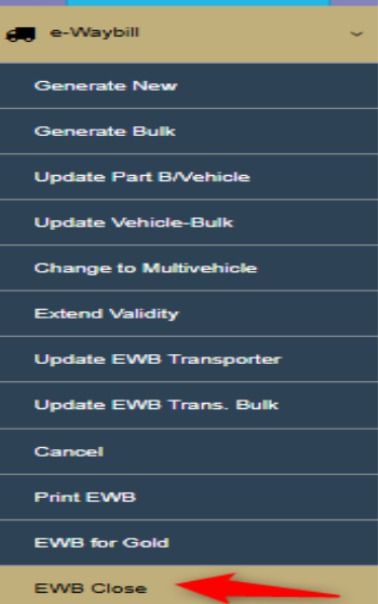
Users can close bills by:
- Entering the e-Way Bill number, or
- Searching by generation date
The process is simple enough, though some staff training will help avoid confusion in the early days.
Drivers Can Also Close E-Way Bills Through Mobile Number Access
This update feels practical. Businesses can now add a mobile number during e-Way Bill generation, specifically for closure purposes. That means drivers or field staff
can close bills without logging into the portal.
Useful during long-distance transport where system access is limited.
How Mobile-Based EWB Closure Works
The feature sits under the Search option on the EWB Common Portal. Once the registered mobile number is entered, active e-Way Bills linked to that number become
visible. Eligible bills can then be closed after delivery.
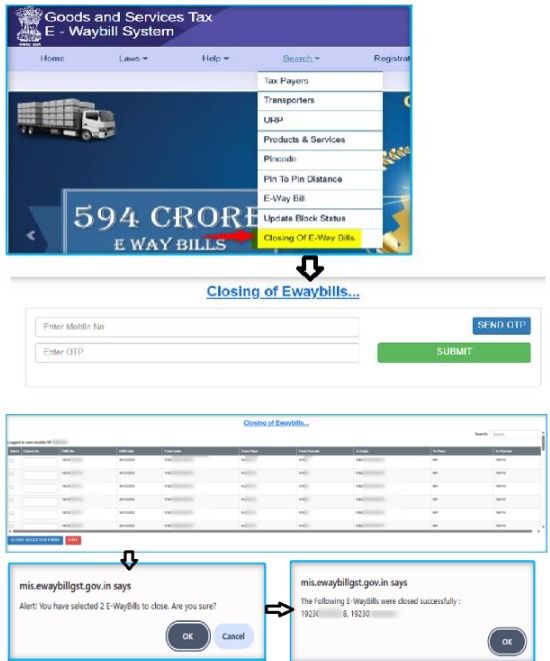
But there is one rule: Closure is allowed only on the day of delivery or the very next day. Miss the timeline, the option disappears.
Mobile Numbers Can Be Updated Later
Businesses are not locked into one number forever. Registered mobile numbers can also be changed during:
- Vehicle Updation
- Consolidated EWB operations
- E Way bill Validity extension requests
Helpful for transport-heavy businesses where drivers or routes change often.
ERP Systems and API Integrations Need Updates Before June 15, 2026
For ERP vendors, GSPs, ASPs, and system integrators, the work starts now. Updated API specifications are already available in the Sandbox environment.
Businesses using automated e-Way Bill generation should complete testing before production rollout begins on June 15, 2026.
Delays here can disrupt dispatches. Sometimes for hours.
What Technical Teams Should Focus On
Technical teams should review API compatibility early and test thoroughly.
Priority areas include:
- Adding support for mandatory Ship-To GSTIN
- Testing EWB closure functionality
- Updating internal workflows and ERP screens
- Revising training guides and SOPs
Because software updates alone are not enough. Teams need to know what changed.
What Details Are Needed For API-Based EWB Closure
For closure requests through API, the following details are required:
- e-Way Bill number
- Closure date
- Remarks
Missing fields or incorrect formatting may create processing errors, so testing becomes important.
What Businesses Should Do Before June 15, 2026
The deadline is close enough to start preparing now. Businesses, transporters, and software teams should treat this like an operational update, not just a compliance change.
Small mistakes in shipment workflows can slow movement or create reporting issues later.
Read More: GST 180-Day E-Way Bill Rule (2025): Impact, Penalties & Compliance
What Taxpayers And Businesses Should Review
Start by identifying where Bill-To/Ship-To transactions happen. Update ERP forms, dispatch systems, and GST master records.
Teams handling invoicing or transport should also understand the closure process. Where useful, register mobile numbers during EWB generation for field-level closure.
What Transporters And Drivers Need To Do
Drivers and transporters should ensure mobile numbers are registered correctly on the portal. They also need to remember the closure timeline, same day or next day only.
Missing that window means the bill cannot be closed later.
What ERP Vendors, GSPs, and ASPs Should Prepare For
ERP providers and software partners should complete Sandbox testing before June 15. API specifications need review, configurations should be updated, plus production rollout must happen without disrupting day-to-day operations.
Need Help Managing GST Compliance?
Managing e-Way Bills, GST refunds, notices, and return filing manually can increase compliance risks and operational delays.
With MYGSTRefund businesses can streamline:
- GST return filing
- GST refund processing
- E-Way Bill reconciliation
- Notice management
- Litigation tracking
- CFO-level GST reporting
Whether you are an exporter, enterprise, CA firm, or growing business, MYGSTRefund Platform helps simplify GST operations through automation and expert support.
Final Thoughts
These updates may look small at first, but they are not. The mandatory Ship-To GSTIN closes an important data gap in Bill-To/Ship-To transactions, while the closure feature gives businesses a cleaner way to track completed deliveries. June 15, 2026, is the date to work toward, not after.
Businesses should update systems, train teams, test APIs, and clean master data before things go live. A little preparation now usually prevents bigger problems later.
For complete GST compliance support, from GST return filing and refund processing to notice handling and CFO-level reporting, MYGSTRefund helps enterprises, corporates, and CAs manage GST processes faster and more smoothly.
Frequently Asked Questions
1. What Are The Latest Changes In The E-Way Bill System?
The new update makes Ship-To GSTIN mandatory in Bill-To/Ship-To transactions and adds a voluntary EWB closure feature. Updated APIs go live on June 15, 2026.
2. What Are The Benefits Of E-Invoicing Compared To E-Way Bill?
e-Invoicing works at the invoice level and helps auto-fill GST returns. e-Way Bills focus on the movement of goods and are generated separately.
3. What Is EWB In The E-Way Bill System?
EWB stands for e-Way Bill, an electronic document needed for transporting goods above Rs. 50,000. It helps track goods movement under GST.
4. Can An E-Way Bill Be Modified After Generation?
An e-Way Bill cannot be fully changed after generation, though vehicle details may be updated. It can also be cancelled within 24 hours if the goods have not moved.
5. What Is EWB Data In The GST Portal?
EWB data includes generated, pending, and received e-Way Bills linked to a GSTIN. Businesses use it for tracking compliance and reconciliation.
Related Posts